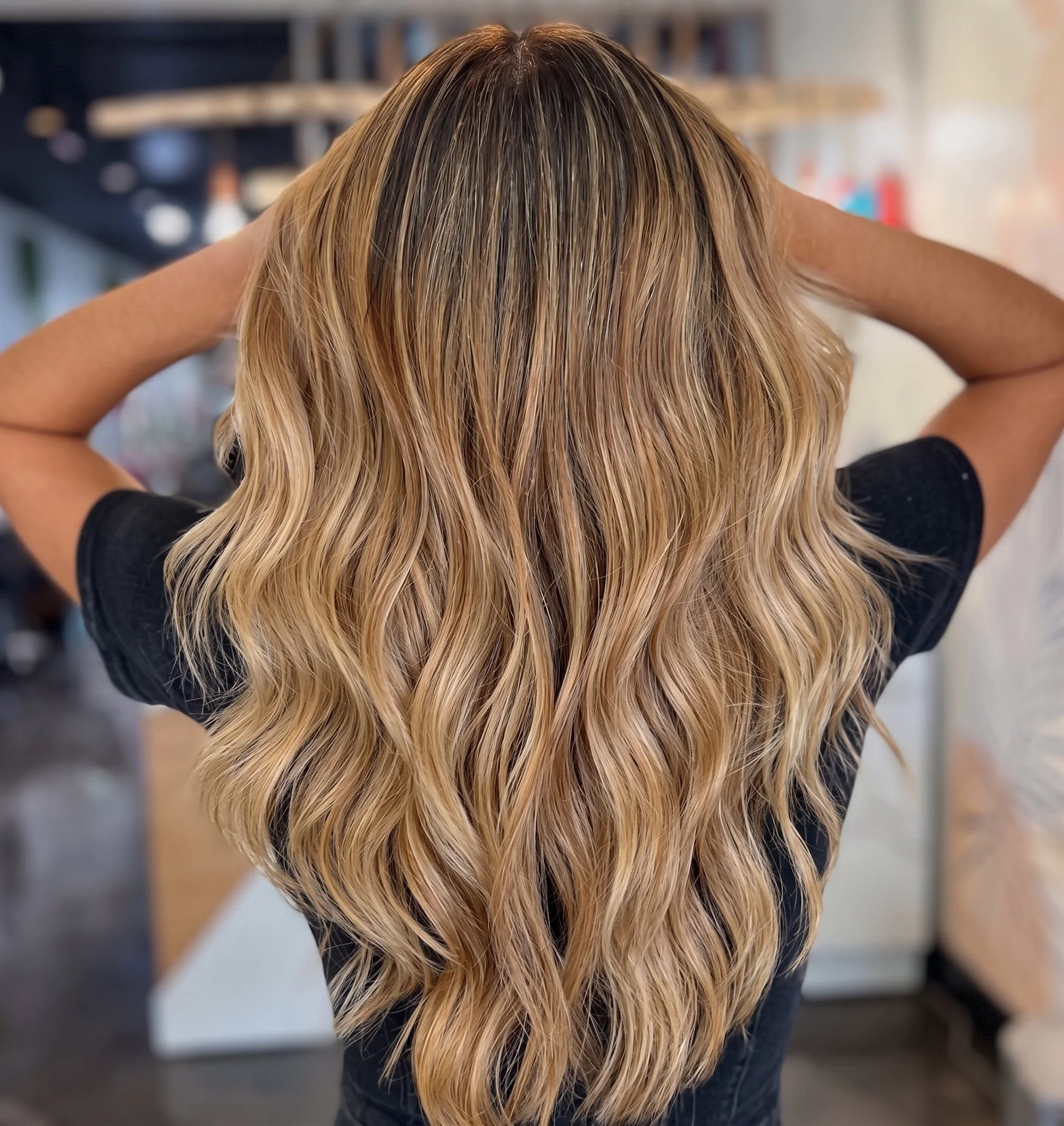
A long layered haircut incorporates graduated lengths cut throughout strands extending past the collarbone, typically measuring 18 to 26 inches from root to perimeter tip. The purpose of this architecture is structural: it removes dense, dead weight from the interior while leaving the overall length and perimeter baseline completely intact. In modern salon design, long layers have evolved beyond the harsh, choppy steps of the past into seamless, fluid graduation that introduces root lift, dynamic swing, and effortless everyday manageability.
For many women with long hair, the primary obstacle is not growing length, but managing its physical mass. As hair grows toward the mid-back and waist, cumulative strand weight pulls down on the scalp, flattening the crown, stretching natural wave patterns, and creating a bulky, immovable perimeter. Precision layering redistributes this mass, unlocking kinetic bounce, framing facial features, and establishing the perfect foundation for natural styling and seamless extension integration.
The Physics of Long Hair: Why Unlayered Strands Fall Flat
A long layered haircut counteracts gravitational drag, which occurs when cumulative hair weight pulls the root axis flat against the parietal ridge of the skull. By removing dense mass from the interior rather than the bottom edge, long layers relieve tension on the scalp, allowing the crown to lift and strands to swing naturally.
The Gravitational Drag Axis
Parietal Ridge (Crown)
Mid-Lengths
Perimeter Baseline
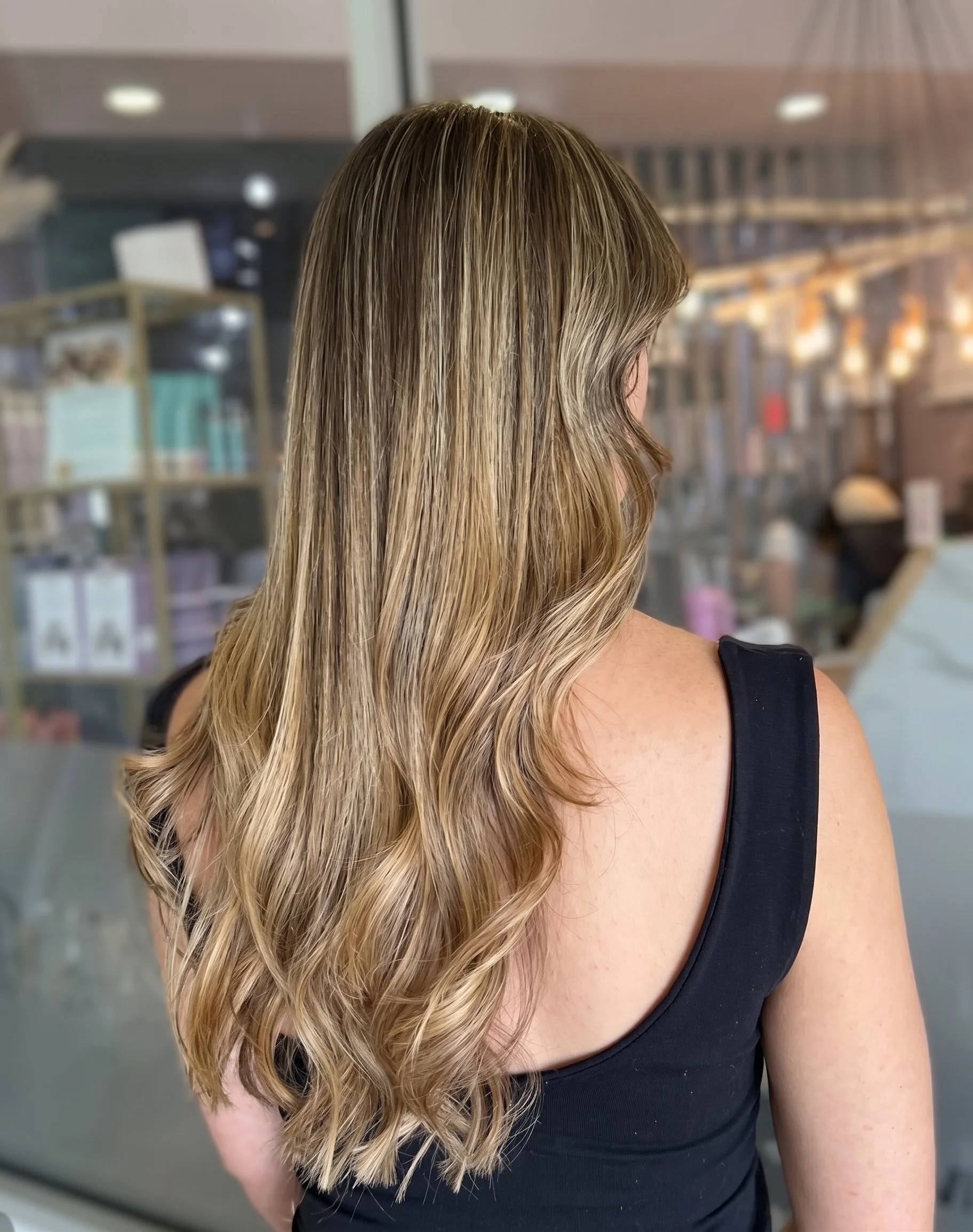
When long hair is cut completely blunt and left unlayered, the weight distribution naturally settles into an unbalanced triangle silhouette. The top third of the head remains limp and flat, while the lower perimeter collects maximum bulk, widening out across the shoulders like a heavy curtain.
Modern cutting techniques counteract this drag by redistributing interior weight. Instead of chopping visible horizontal steps into the hair, master stylists create graduated negative space. Lifting interior subsections and cutting along specific angles relieves gravitational tension, allowing the surface canopy to float, bounce, and reflect light.
This evolution aligns with the movement toward fluid, touchable hair seen across every leading haircut trend this 2026. When planned correctly, long layers deliver:
Immediate crown elevation: Natural lift without requiring backcombing, crimping, or heavy root-lifting sprays.
Kinetic swing: Strands that move dynamically with the body rather than falling as a stiff, static sheet.
High-versatility styling: Wear voluminous blowouts, heatless waves, or high ponytails without fighting dense perimeter bulk.
Extension readiness: An invisible, shelf-free canvas for blending lightweight everyday wefts and tape-ins.
The Problem-Solution Matrix: Long Hair Frustrations vs. Structural Fixes
Long layered haircuts solve common mechanical frustrations through targeted weight evacuation rather than generic trims. Understanding the structural cause of each issue allows stylists to correct hair behavior at the chair.
Flat Crown
Bulky “Triangle” Perimeter
| Common Frustration | Mechanical Cause | Structural Layering Fix | Target Result |
|---|---|---|---|
| Flat, Limp Crown | Downward gravitational pull from unbroken perimeter weight | High-elevation (90°) interior crown graduation | Immediate root lift and natural crown volume |
| Dense "Curtain Effect" Ends | Bulk concentrated along the bottom baseline | Sub-surface slide channel cutting and perimeter beveling | Fluid swing, lighter ends, and kinetic movement |
| Face Swallowed by Length | Solid front strands with no cheek or jaw graduation | Multi-tiered cascading face-framing angles | Accentuates cheekbones, jawline, and neckline |
| Visible Extension Ridges | Blunt natural ends resting over extension wefts | Micro point-cut feathering through the mid-occipital zone | Seamless, undetectable blend between natural and added hair |
| Tangles at the Nape | High strand friction behind the neck from dense clusters | Sub-occipital weight evacuation | Tangle-free drape and improved airflow |
Definitive Long Layered Haircut Styles for 2026
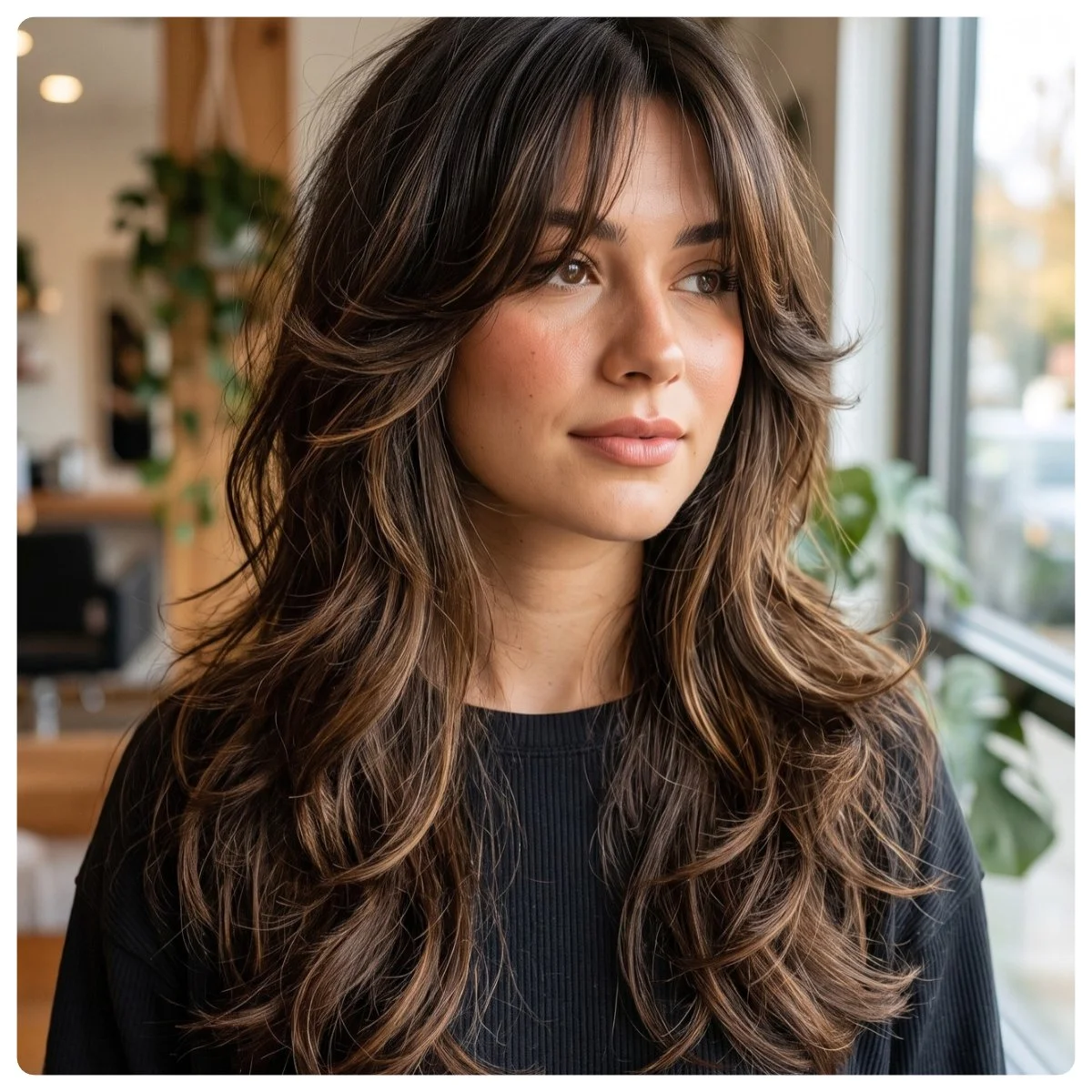
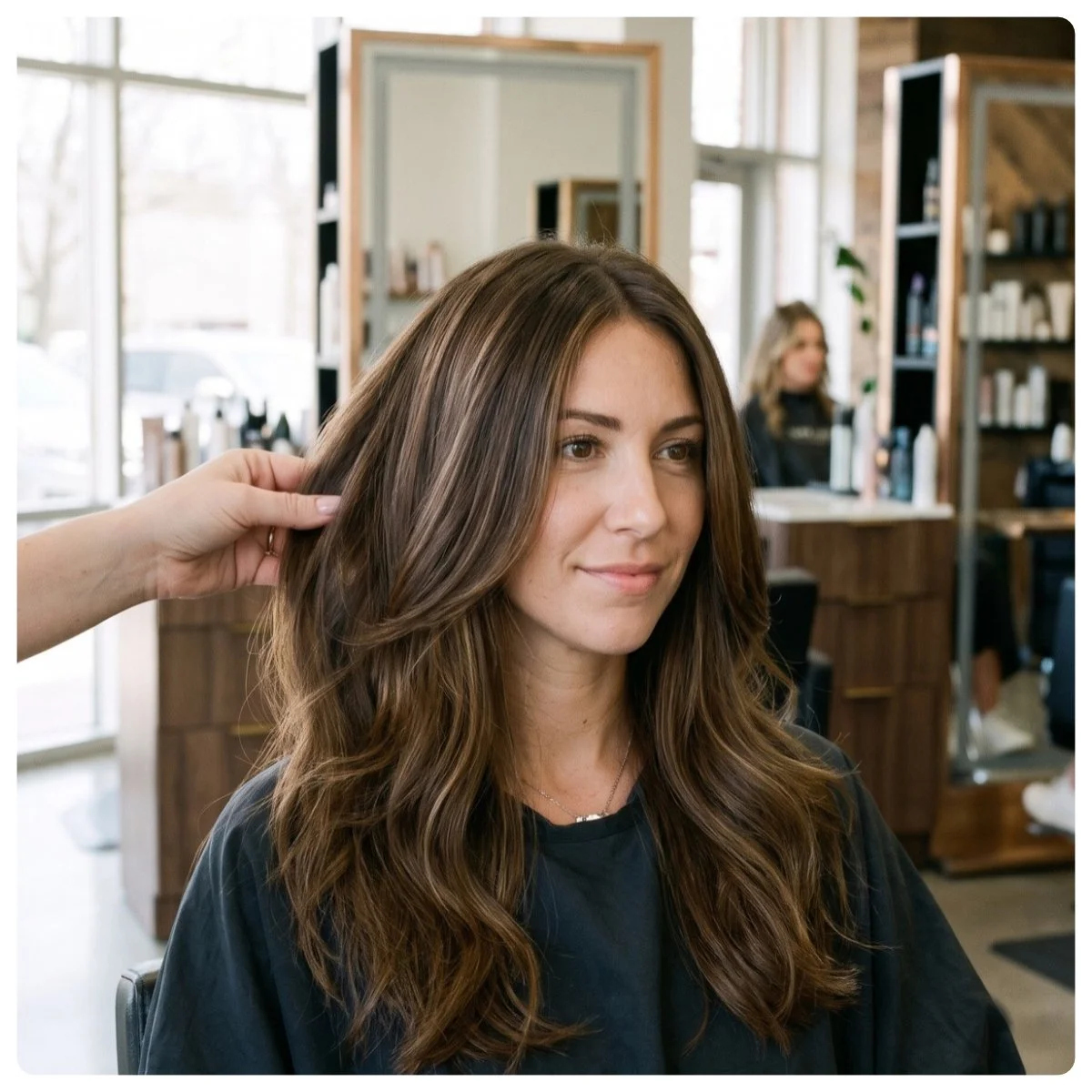
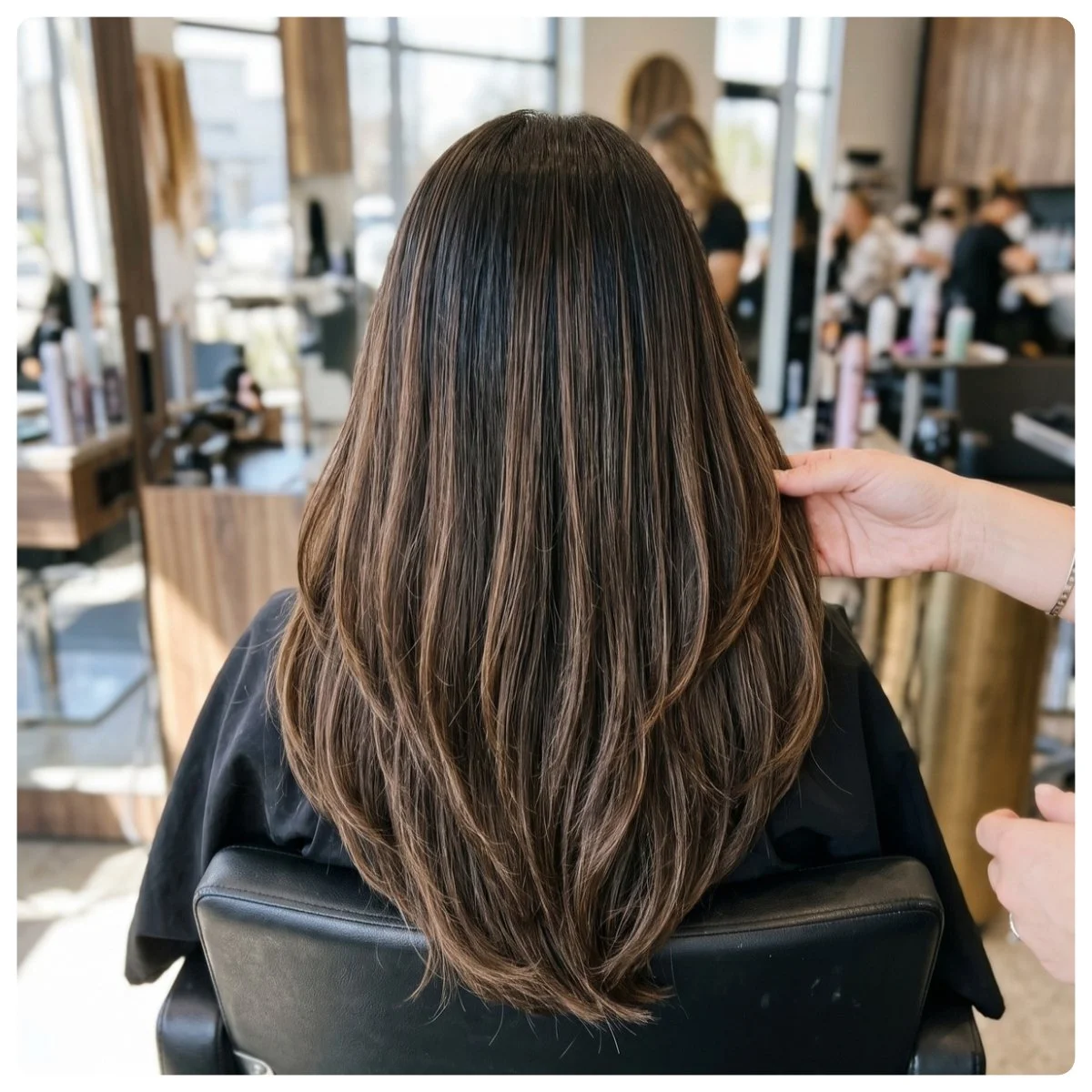

The top long layered haircuts of 2026 range from bold, multi-tiered face-framing cuts to completely invisible interior channels. The right style depends on whether you prefer voluminous, heat-styled blowouts or wash-and-go air-dried texture.
The Butterfly Cut
- Two-tiered dynamic volume
- Shorter face-framing wings
- Ideal for blowout lovers
The Invisible Ghost Layer
- Hidden interior channels
- Preserved exterior canopy
- Best for fine strands & extensions
Soft U/V-Shape Perimeter
- Curved rear baseline
- Eliminates lower-back drag
- Cascades cleanly over shoulders
The Long Parisian Shag
- Deconstructed crown volume
- Airy curtain fringe
- Effortless wash-and-go texture
The Modern Butterfly Cut
The butterfly cut combines the visual fullness of short hair around the face with the flow of long hair in the back. Built on a pronounced two-tiered framework, the shortest layers form face-framing wings that sweep across the chin and collarbone, while the rear retains full baseline length down the back.
When viewed from the front, the butterfly cut mimics the bounce and lift of a collarbone-length cut. From behind, it showcases full length and density. This cut is designed for women who wear voluminous round-brush blowouts, as the tiered wings flip outward and backward to create dramatic dimension.
The Invisible Ghost Layer Cut
Ghost layering is the premier choice for women who want movement without sacrificing density or revealing visible layer lines. The stylist isolates the top surface canopy and clips it away, then uses slide-cutting to carve narrow, graduated channels into the interior hair beneath it.
Because the top canopy falls smoothly over these hidden channels, the hair appears completely one-length when resting still. However, as soon as you walk, run your fingers through your hair, or step into a breeze, the internal channels push against the surface strands, creating subtle lift, airiness, and natural separation.
The Soft Curved U-Shape & V-Shape Layered Cut
A blunt, straight-across perimeter on long hair creates square corners that sit heavily on the lower back, bunching up and dragging the entire hairstyle backward.
Transitioning the baseline into a curved U-shape or a slightly tapered V-shape removes these dense rear corners:
The U-Shape: Gentle, rounded graduation that maintains broad perimeter density while letting front strands drape over the shoulders.
The V-Shape: A steeper, more angular perimeter that concentrates length along the spinal column, dramatically reducing side weight for maximum swing.
The Long Parisian Shag
The long Parisian shag swaps rigid symmetry for soft, lived-in texture. Featuring crown graduation that blends into wispy curtain fringe and airy ends, this cut enhances natural Type 2 waves and Type 3 spirals.
Rather than relying on heavy heat styling, the long shag is designed to air-dry. By strategically carving away dense pockets around the ears and occipital shelf, curls and waves clump into soft spirals without puffing out into an uncontrolled shape.
Precision Layering Mechanics by Hair Density
Layering long hair requires adjusting elevation angles and texturizing techniques to match individual strand diameter and follicular density. While thick hair needs internal bulk removal, fine hair demands perimeter preservation to avoid stringy, translucent ends.
| Hair Density & Texture | Primary Layering Method | Weight Distribution Target | Ideal Maintenance Cycle |
|---|---|---|---|
| Fine / Low-Density | Perimeter bluntness with 90° vertical crown elevation | Retain maximum baseline opacity; lift root axis | 8 to 10 weeks |
| Medium / Balanced | Soft point texturizing & 45° exterior beveling | Enhance movement and dynamic bounce | 7 to 9 weeks |
| Thick / High-Density | Internal channel slicing & sub-occipital debulking | Evacuate bulk behind ears and along the nape | 6 to 8 weeks |
| Wavy / Curly (Types 2 & 3) | Visual curl cluster carving & dry perimeter sculpting | Disperse weight to prevent wide, triangular flare | 10 to 12 weeks |
Fine Hair Fortification
Fine hair easily loses density if layered aggressively. When long, fine hair is cut with low-angle exterior layers, the ends become see-through and stringy.
To prevent this, stylists keep the bottom two to three inches of the perimeter completely blunt. Volume is built entirely from within: the stylist elevates sections from the crown straight up at a 90-degree angle to the scalp, point-cutting only the interior tips. This produces internal lift that props up the hair at the root without sacrificing the solid baseline along the bottom.
High-Density Occipital Debulking
Thick, coarse hair holds heavy concentrations of mass beneath the occipital bone and behind the ears. Using standard thinning shears on thick long hair is counterproductive: the notched teeth cut random strands short, creating coarse stubble beneath the surface that pushes outward and causes uncontrollable puffiness, especially in humid conditions.
Instead, master stylists at the best hair salon in Fort Lauderdale employ internal channel slicing using smooth-bladed shears. By gliding open shears downward along the interior shaft parallel to the hair growth, dense ribbons of hair are excised cleanly. The outer canopy falls flush, dropping significant bulk while preserving smooth, frizz-free cuticle alignment.
MARINA VOGEL
Stylist Perspective:: Precision Layering & Climate Control
""When clients with long hair sit in my chair, they almost always say the same thing: 'I want volume and movement, but please don't take my length.' They've been traumatized by outdated cutting methods that left them with thin, wispy tails at the bottom.
In European precision cutting, we view long hair as architectural balance. If you live in a coastal, high-humidity climate like South Florida, heavy hair collapses at the roots while swelling at the perimeter. The solution is never thinning shears. We use targeted internal slide-cutting beneath the occipital bone to hollow out dense weight pockets, paired with high-elevation crown graduation that preserves a crisp, luxurious baseline.
This approach is also essential for clients wearing lightweight everyday extensions—such as seamless tape-ins or flat wefts. By feathering the natural perimeter into the extension hair through soft point-cutting, natural hair and added hair move together as one cohesive, fluid piece that holds its shape even in coastal moisture."
— MARINA VOGEL, Owner, Mavo Hairlounge
Face-Shape Mapping: Tailoring Face-Framing Tiers
Face-framing layers establish the focal points of a long haircut. By choosing where the shortest layer begins and how it tapers downward, you direct the eye to highlight your best facial features.
Round
Square
Oval
The Round Face
Anatomical Character: Equal width and length with soft curves along the cheeks and jaw.
Optimal Architecture: Long, diagonal angles that visually lengthen the neck. The shortest face-framing layer must begin strictly below the chin—never at the cheekbones. These vertical lines draw the eye downward, slimming the face.
Angles to Avoid: Horizontal fringe or chin-skimming layers that emphasize cheek fullness.
The Square Face
Anatomical Character: A wide forehead paired with a sharp, angular jawline.
Optimal Architecture: Soft, feathered layers that start right at the curve of the jaw. Using delicate point-cutting to soften the perimeter around the mandibular angle blurs sharp jawlines without concealing bone structure.
Angles to Avoid: Blunt, geometric front layers that end directly at the corners of the jaw.
The Oval Face
Anatomical Character: Symmetrical proportions with cheekbones slightly wider than the forehead and jawline.
Optimal Architecture: Universal styling flexibility. Cheekbone-skimming curtain bangs that transition smoothly into cascading mid-shaft layers highlight natural symmetry.
Angles to Avoid: Extremely heavy, straight-across bangs that shorten the facial profile.
The Heart / Inverted Triangle Face
Anatomical Character: A broad forehead and delicate cheekbones narrowing down to a slender, pointed chin.
Optimal Architecture: Direct volume around the collarbone and shoulders. Introducing face-framing tiers that curve inward around the neck fills in the space beside a narrow chin, creating balanced visual symmetry.
Angles to Avoid: High crown layers with no shoulder-level tiers, which leave the lower face visually unsupported.
The Oblong / Long Face
Anatomical Character: A narrow facial structure with greater length than width.
Optimal Architecture: Horizontal volume through the mid-lengths. Sweeping curtain bangs paired with butterfly layers that start at the cheekbones push the visual silhouette outward, creating the illusion of width.
Angles to Avoid: Center-parted, bone-straight layers that draw the eye exclusively downward.
Daily Maintenance, Heatless Routines & Environmental Defense
A precision cut provides the structural blueprint, but maintaining polished movement and clean ends day-to-day comes down to smart home care. Beyond thermal protection, long hair faces an ongoing biological vulnerability: strand age. Because human hair grows roughly half an inch per month, the ends of a 24-inch mane have survived up to four years of environmental friction, detangling, and washing.
A dermatological review published in the International Journal of Trichology notes that cumulative physical and chemical trauma causes progressive "hair weathering"—the gradual erosion of the cuticle's protective lipid barrier and surface scales from root to tip. In coastal climates, where salt air and intense UV exposure accelerate this degradation, shielding the hair fiber with lightweight leave-in lipids is essential for keeping long layers from fraying.
Morning Blowout
- 1 Rough dry to 80% at 6" away
- 2 Ceramic brush root tension
- 3 Cool-shot blast locks cuticle
Overnight Heatless
- 1 90% dry + leave-in serum
- 2 Satin rod wrap away from face
- 3 Morning unwrap + dry spray
The 12-Minute Long Hair Blowout Protocol
The 80% Rough-Dry: Never clamp a round brush onto dripping-wet strands. Apply a thermal protectant, keep your nozzle in continuous motion at least six inches away from the hair shaft, and direct airflow down the cuticle until the hair is roughly 80% dry. This technique protects the internal fiber while evaporating surface water efficiently.
Directional Tension: Divide hair into four clean quadrants (two in front of the ears, two in back). Working with a medium-to-large ceramic round brush, lock the hair into the bristles, lift upward at the root for volume, and roll through the mid-shaft with the dryer nozzle angled downward.
The Cool-Shot Lock: Once a section is completely dry and warm, hit the brush core with your dryer's cool-shot button for 5 to 7 seconds. Cooling the keratin bonds while wrapped around the barrel locks in the bend and seals the cuticle for long-lasting gloss.
Heatless Air-Dry and Overnight Preservation
For effortless, heat-free morning waves without leaving the hair shaft saturated for hours, let your hair air-dry until it is roughly 90% dry. Prep the remaining damp lengths with a lightweight, peptide-rich leave-in emulsion, then wrap two front sections around a flexible satin heatless curling rod, directing strands back and away from the face. Secure the ends loosely with silk scrunchies.
When you release the rods in the morning, rake through the waves with two drops of dry finishing oil. You get soft, bouncy movement with zero mechanical friction or heat fatigue.
Coastal Humidity and Climate Resilience
In subtropical, moisture-rich coastal climates like South Florida, outdoor humidity breaks down hydrogen bonds in the hair, triggering mid-day frizz, puffiness, and style collapse.
To keep long layers crisp and controlled in high humidity:
Avoid Humectant Overload: Steer clear of styling products loaded with simple glycerin or high-ratio propylene glycol, which draw atmospheric water vapor directly into the cortex.
Build an Anti-Humectant Shield: Finish your style with an invisible, silicone-free anti-humidity spray that utilizes fluoropolymers or lightweight plant esters. These ingredients form a breathable hydrophobic barrier over the hair shaft, repelling environmental moisture while sealing internal hydration inside.
Preserve Perimeter Weight: Ensuring your stylist keeps the cut's bottom perimeter dense and weighted prevents the hair from expanding outward into an unwanted triangular flare as the day goes on.
Blending Everyday Extensions with Long Layers
Long layered haircuts provide an ideal baseline for everyday extension wearers. When integrating 14- to 18-inch lightweight wefts or tape-ins to build perimeter density:
Extensions are installed along the mid-occipital horseshoe curve to reinforce baseline thickness rather than adding extreme, unnatural length.
The stylist point-cuts your natural surface layers directly into the top of the extension line, feathering the edges so natural strands drape invisibly over the wefts.
This approach delivers instant fullness while remaining completely undetectable, even when the hair is swept up into a clip or high ponytail.
The Salon Chair Consultation Blueprint
Clear communication at the salon chair ensures your vision aligns with technical execution. Stylists think in terms of elevation, angles, and mass distribution, while clients often describe how they want the hair to feel.
Salon Chair Consultation Cheat Sheet
When evaluating inspiration images, look for reference photos that match your natural hair density, texture, and hairline rather than focusing solely on overall length. A photograph of coarse, wavy hair styled with large-barrel irons will look completely different on fine, straight strands.
Executing these technical cuts requires deep experience with precision shear work, density carving, and climate-specific hair behavior. When you're ready to revive flat, heavy hair with an architectural, weightless shape, schedule an appointment for your custom women’s haircut in Fort Lauderdale. A master stylist will craft a personalized cut that works effortlessly from the salon chair to your everyday life.
Maximizing Movement Without Compromising Length
A well-crafted long layered haircut eliminates the downward drag of heavy hair, replacing lifeless length with buoyant volume, fluid swing, and effortless everyday polish. Whether you opt for the dramatic tiers of a butterfly cut, the effortless texture of a long Parisian shag, or the hidden architecture of invisible ghost layers, the goal remains the same: evacuating internal bulk while preserving a strong, healthy perimeter.
By tailoring interior graduation to your specific hair density, selecting face-framing angles that complement your bone structure, and protecting your ends from environmental weathering, you can transform a heavy, static mane into a dynamic, manageable style. You do not have to sacrifice your hard-earned inches to achieve professional-level movement and body, you simply need the right structural architecture.
Long Hair Gravitational Drag & Layer Matcher
Identify your hair density, gravitational drag point, and styling routine to prescribe your ideal 18–26" layer architecture.
Frequently Asked Questions
-
Not when cut using high-elevation techniques. While traditional low-angle layering can strip density from the perimeter and make ends look stringy, modern crown graduation lifts the root axis while leaving the bottom baseline solid and blunt. This creates the visual appearance of thicker, fuller hair throughout.
-
No. Precision long layering modifies the internal weight and surface graduation of the hair without shortening the bottom perimeter line. Your longest length stays exactly where it is, while the removal of internal bulk restores bounce and movement.
-
A long layered cut should be trimmed every 8 to 12 weeks. Because the overall silhouette carries significant length, subtle grow-out is less noticeable than with short bobs. However, regular micro-trims are essential to keep face-framing angles sharp and prevent split ends from traveling up the hair shaft.
-
Classic long layers feature subtle, blended graduation distributed evenly throughout the sides and back. A butterfly cut uses a distinct two-tiered approach, pairing dramatic, shorter face-framing wings around the chin and collarbone with an intact, long perimeter in the back.
-
Avoid over-texturizing with thinning shears, preserve a blunt baseline along the bottom perimeter, and protect the cuticle layer with thermal protectants. Wrapping damp hair in microfiber rather than rough terry cloth also minimizes mechanical friction and keeps ends smooth.
A well-crafted long layered haircut eliminates the downward drag of heavy hair, replacing lifeless length with buoyant volume, fluid swing, and effortless everyday polish. By tailoring internal graduation to your natural density and framing angles to your bone structure, you preserve every inch of length while enjoying hair that moves with ease and confidence.
Read more…