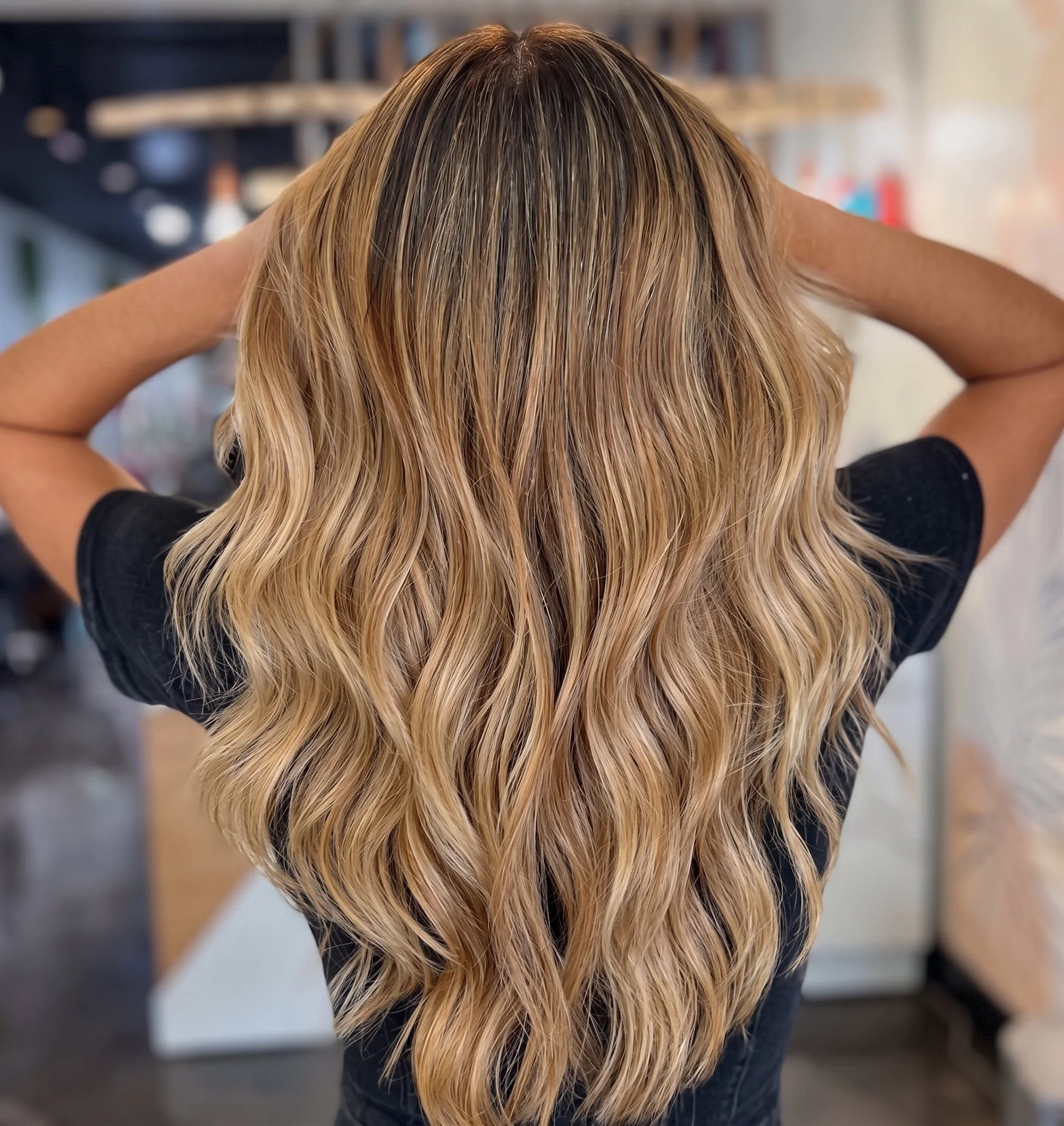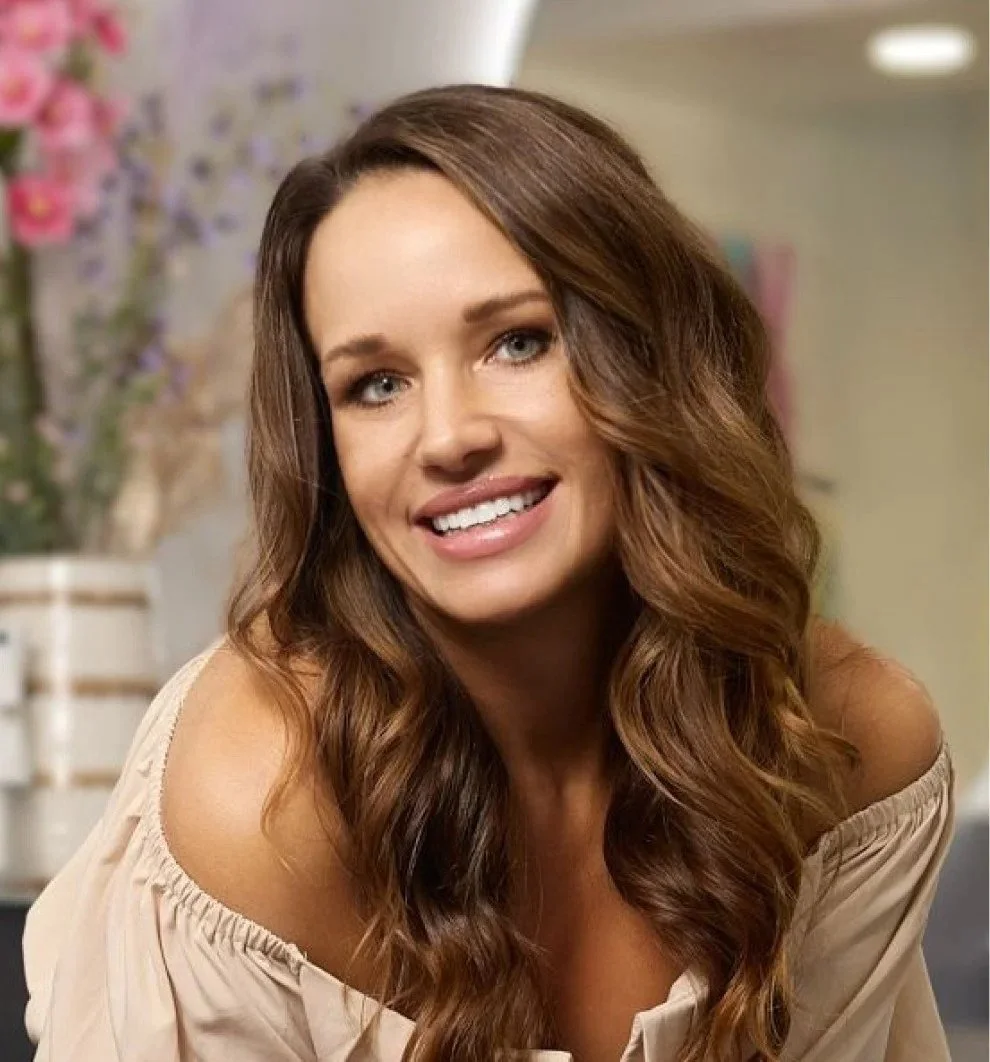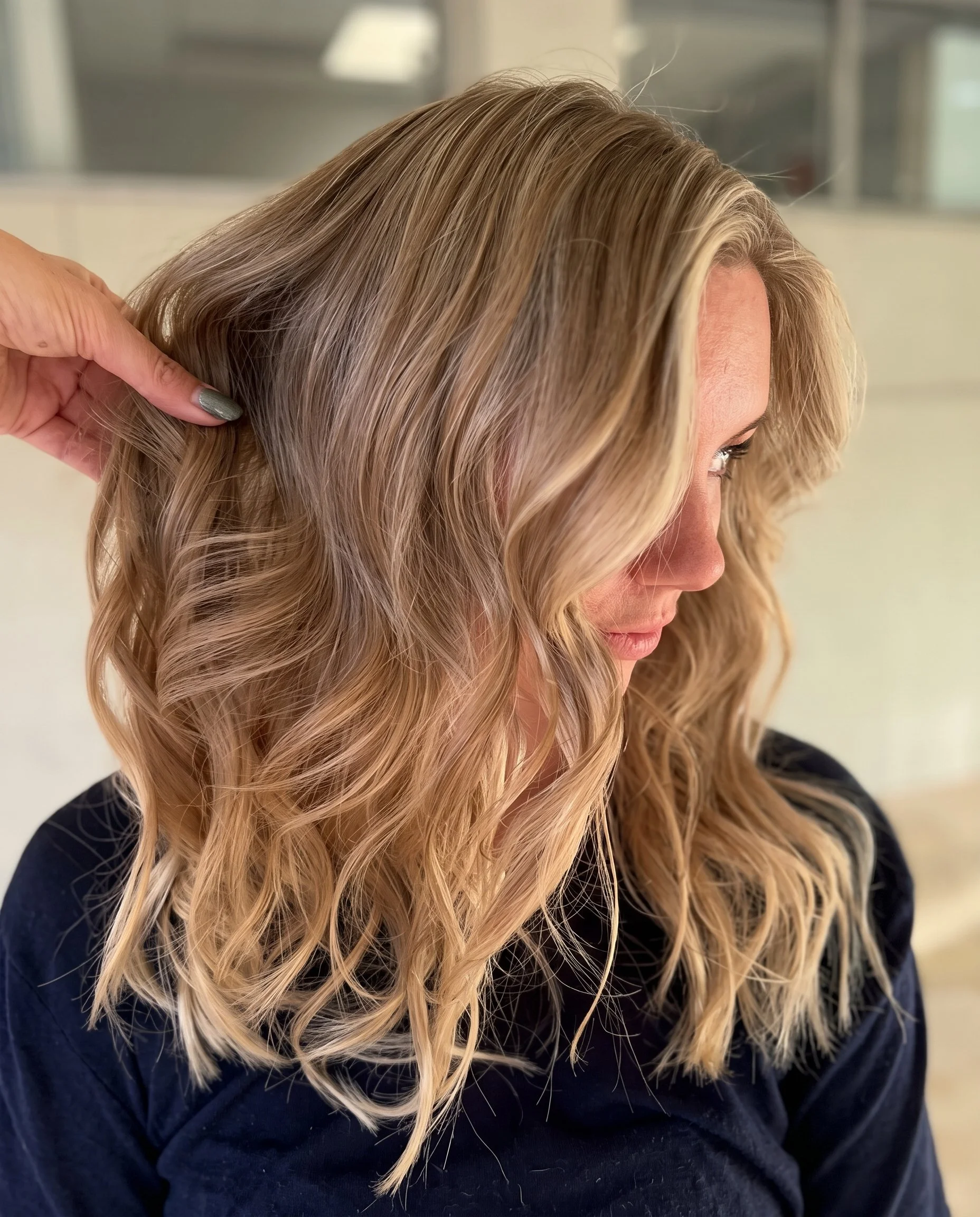
A medium length haircut for women falls between the collarbone and the lower shoulder blades, measuring approximately 12 to 18 inches from root to perimeter tip. This architecture balances the styling versatility of long hair with the structural lift, airiness, and manageable drying time of a shorter silhouette. In modern salon design, mid-length cuts rely on tailored interior graduation, seamless face-framing angles, and weight-distributing techniques that enhance natural texture while resisting environmental expansion.
The modern appetite for versatile hair has made the mid-length cut the most requested silhouette in contemporary salons. Rather than acting as an awkward in-between phase during a grow-out, today’s mid-length haircuts represent deliberate, high-craft architecture. They deliver the polished look of editorial styling without requiring daily thermal re-working, providing a clean baseline for busy lifestyles, humid coastal environments, and seamless extension blending.
The Modern Mid-Length: Why Medium Hair Defines 2026
The contemporary mid-length silhouette rests precisely along the anatomical perimeter: starting at the hollow of the clavicle and stopping just above the inferior angle of the scapula. This anatomical placement is intentional. It preserves enough mechanical weight to maintain clean perimeter lines while remaining short enough to lift away from the shoulders, preventing the frustrating "kick out" that plagues static, one-length cuts.
Anatomical Mid-Length Boundary
Collarbone / Clavicle
~12 Inches✦ High perimeter bounce, collar grazing, clean line
Top of Scapula / Mid-Back
~18 Inches✦ Fluid curtain movement, secure updo length, draping
Modern cuts prioritize kinetic flow over dense perimeters. Instead of blunt lines that drop like a curtain, master stylists construct internal negative space. Using precision shears held at varying angles, internal bulk is removed from beneath the exterior shell. This technique allows natural hair to float, bend, and react organically to body movement.
This approach reflects the wider evolution seen in every dominant haircut trend this 2026, where dense, over-styled looks have been replaced by effortless, lived-in movement. A well-designed mid-length shape gives you:
Full updo capability (effortless high ponytails, chignons, and claw-clip wraps) without stray neck hairs slipping free.
A 40% reduction in thermal styling and blowout time compared to waist-length hair.
Enhanced root volume, as shedding 4 to 6 inches of dead perimeter weight immediately reduces gravitational scalp drag.
An ideal base for integrating lightweight, seamless extensions that add density through the perimeter without creating an obvious shelf.
Definitive Medium Length Haircut Styles for 2026
The premier mid-length haircuts of the year balance tailored perimeter structure with customizable interior movement. Whether working with fine, straight hair or coarse, wavy spirals, these four core cuts represent the vanguard of salon styling.
Blunt Collarbone Lob
- Clean, crisp perimeter
- Concentrated baseline weight
- Best for fine strands
The Invisible Layer
- Internal hidden movement
- Full perimeter preserved
- Best for high-density & extensions
Modern Midi Shag/Wolf
- Deconstructed crown volume
- Face-framing curtain fringe
- Air-dry, wash-and-go shape
90s Butterfly Midi
- Cascading tiered volume
- Chin & clavicle flick layers
- High-volume, bouncy blowout
The Blunt Collarbone Lob (Clavicle Cut)
The blunt collarbone lob is an architectural power cut featuring a razor-sharp, horizontal perimeter resting directly at the clavicle. Unlike shorter variations highlighted in classic bob haircut trends, which sit along the jaw or chin, the collarbone lob leverages the shoulder shelf to create an intentional focal point along the neckline.
To prevent the cut from feeling stiff, stylists use micro-point cutting on the bottom two millimeters of the baseline. This technique softens the line slightly while keeping the visual density completely opaque. It is the premier choice for fine-to-medium hair textures that need to maximize the look of thickness at the ends.
The Invisible Layered Cut ("Ghost Layers")
Ghost layering is a technical cutting method where shorter, texturized layers are placed internally beneath an intact, solid exterior canopy. The top section of the hair remains unbroken, concealing the graduated tiers beneath it.
As you move, these short internal channels push upward against the longer surface strands, generating volume and lift without leaving visible, chopped steps on the surface. Ghost layers are especially effective for:
Dense, heavy hair that collapses under its own weight.
Blending seamless tape-in or weft hair extensions without creating a visible line of demarcation between natural hair and installed pieces.
Achieving a polished, one-length aesthetic that still has interior movement.
The Refined Soft Shag & Modern Midi Wolf
The 2026 soft shag strips away the extreme, shredded disconnections of early wolf cuts, replacing them with fluid transitions and soft, cheekbone-skimming curtain bangs. The stylist establishes a foundational round shape around the crown, using low-elevation slide cuts to blend into feather-light perimeter lengths.
This cut accentuates natural Type 2 waves and Type 3 curls by removing the dense corners that cause mid-length hair to flare out into an unflattering pyramid shape. It styles easily with a texturizing sea-salt spray or curl balm, making it an exceptional wash-and-go option for daily wear.
The 90s Butterfly Midi Cut
Inspired by vintage editorial runway volume, the butterfly midi cut utilizes multi-tiered, cascading layers focused strictly around the front hairline, temple area, and jawline. The shortest layers begin just below the chin, directing attention inward to sculpt the facial profile, while the rear perimeter retains full baseline thickness.
The butterfly midi cut is designed for women who prefer a voluminous round-brush blowout. When styled with a large-barrel ceramic thermal brush, the cascading tiers flip backward and inward, creating rich dimension that catches the light and frames the face.
Precision Layering Mechanics: Tailoring Cuts by Hair Density
A medium length haircut succeeds or fails based on how your stylist manages hair density. Two women can request the exact same mid-length style, but their strand diameter, follicle distribution, and wave patterns require completely different cutting approaches to make it work.
Fine / Low Density
- Preserves outer baseline
- High crown elevation
- No thinning shears
Thick / High Density
- Internal channel cutting
- Weight pulled from nape
- Slide cutting on interior
Thinning shears should never be used indiscriminately through the mid-lengths of a haircut. Thinning shears snap strands at random intervals along the hair shaft, creating uneven miniature hairs that catch moisture in the air and trigger severe frizz. Instead, a precision-focused hair stylist in Fort Lauderdale will use structural point-cutting, interior channel slicing, or dry-carving techniques to protect the cuticle.

MARINA VOGEL
Expert Insights
"In classical European cutting technique, you never simply cut off length—you build an internal architectural foundation. When clients ask for a mid-length cut, their biggest fear is the awkward ‘triangle flare’ or heavy perimeter shelf that collapses the moment they step into South Florida’s humidity. By using targeted interior slide-cutting beneath the occipital bone rather than standard thinning shears, we remove dense weight while preserving a clean, expensive-looking perimeter line. This structural memory is what allows natural hair—or hair blended with seamless extensions—to hold its movement and resist humidity throughout the day."
— MARINA VOGEL, Owner, Mavo Hairlounge
Hair Density vs. Layering Technique Breakdown
| Hair Density & Texture | Primary Layering Method | Weight Distribution Target | Ideal Maintenance Cycle |
|---|---|---|---|
| Fine / Low-Density | Blunt perimeter with high 90° crown elevation | Maintain maximum baseline opacity; add lift at roots | 8 to 10 weeks |
| Medium / Balanced | Soft point texturizing & 45° exterior beveling | Introduce kinetic swing without removing density | 7 to 9 weeks |
| Thick / High-Density | Internal channel cutting & sub-occipital debulking | Evacuate dense pockets behind ears and through the nape | 6 to 8 weeks |
| Wavy / Type 2 & 3 | Visual cluster carving & dry perimeter sculpting | Disperse weight clusters to prevent wide, triangular flare | 10 to 12 weeks |
Fine Hair Fortification
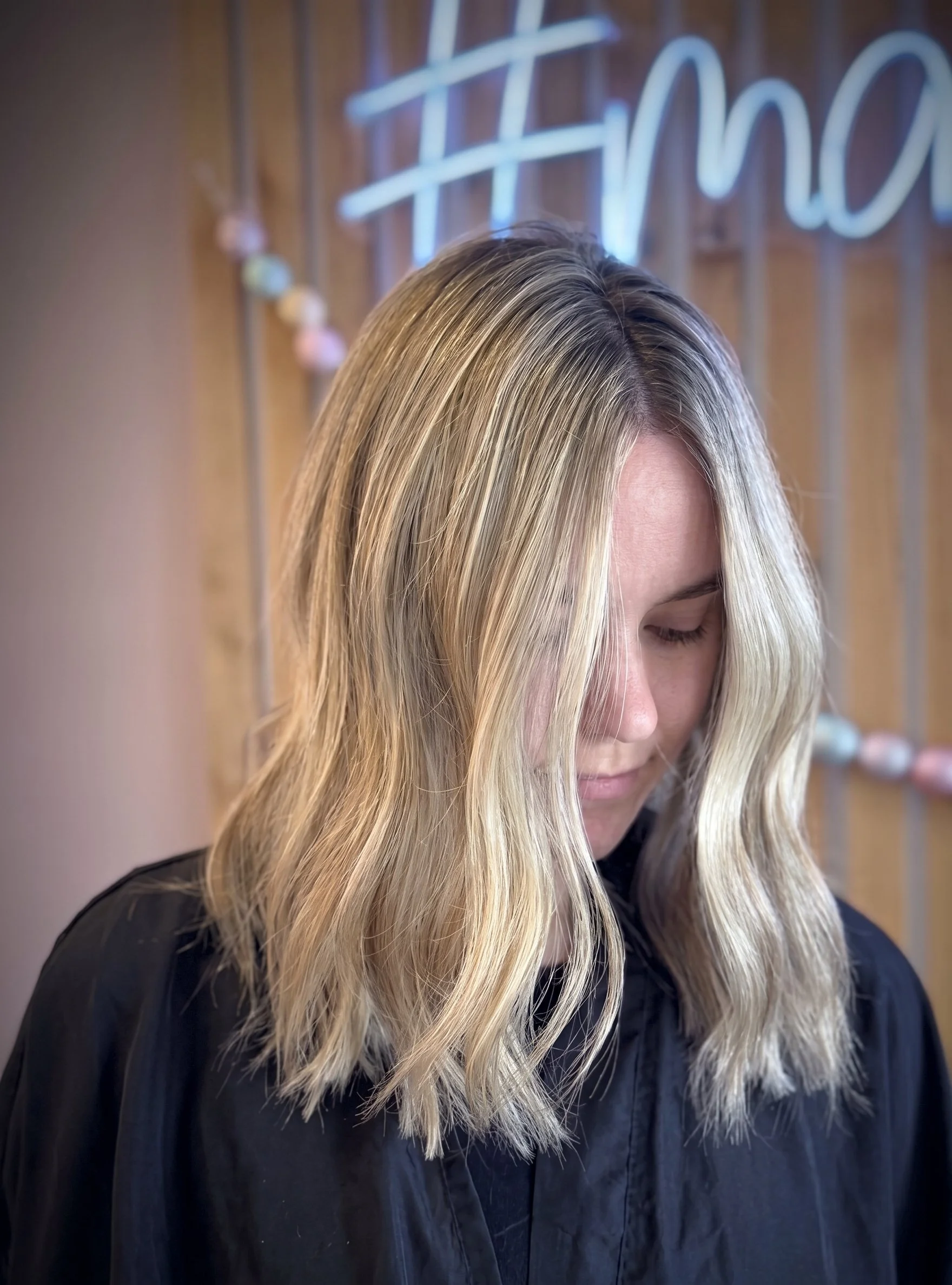
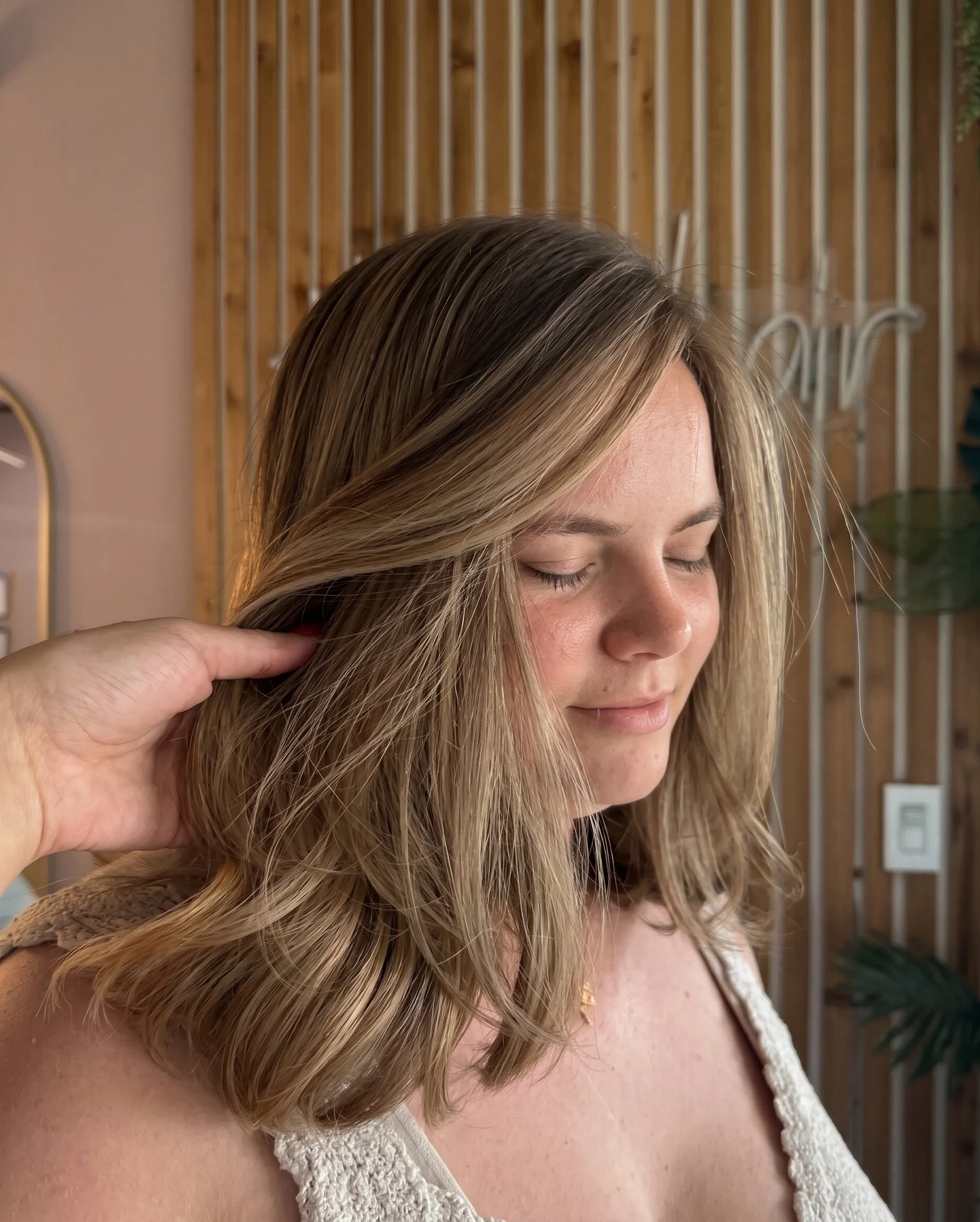
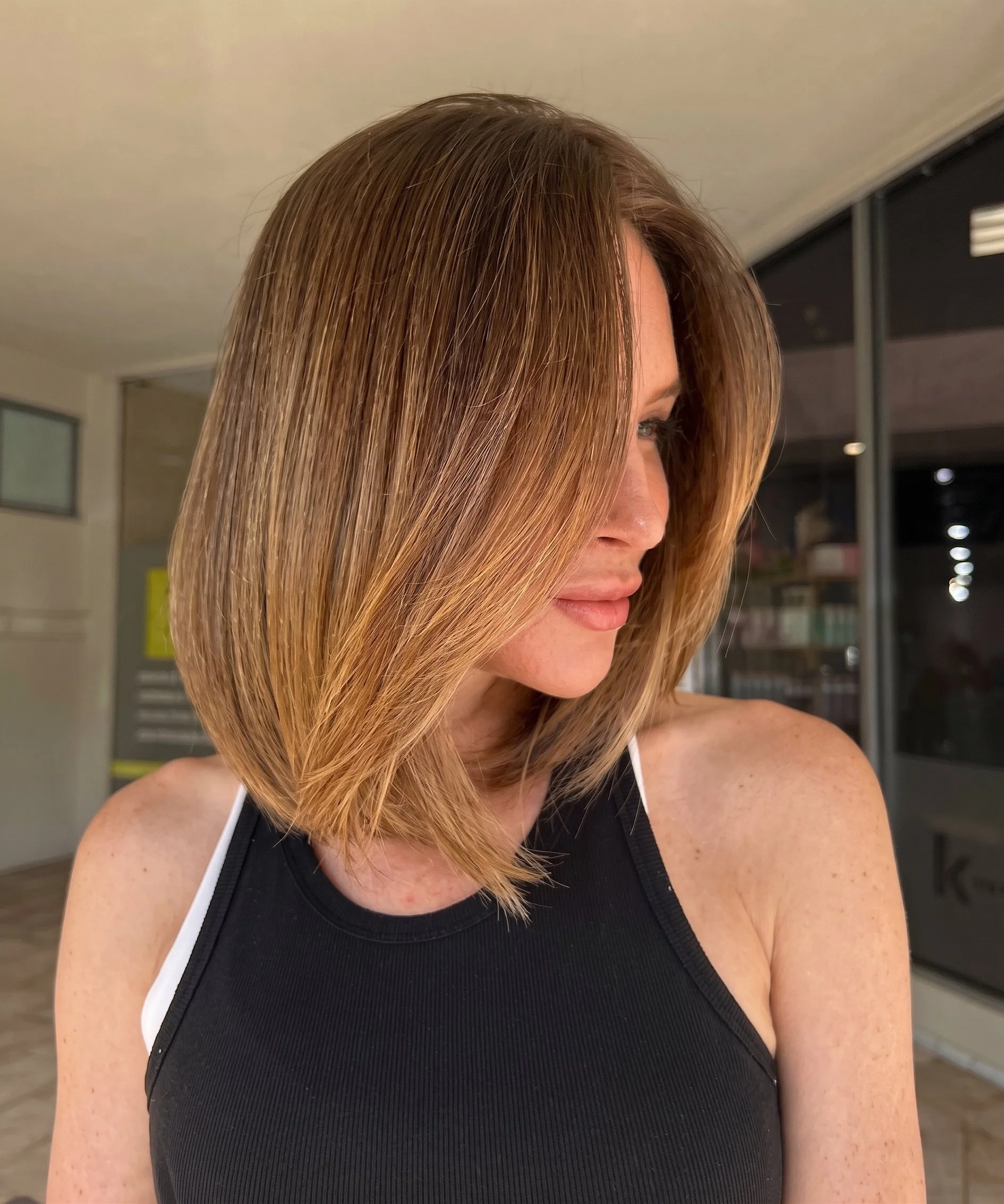
When cutting fine hair to a medium length, the priority is maintaining structural integrity along the bottom perimeter. Layers must be concentrated primarily around the crown and interior crown axis. Elevating hair directly upward (90 degrees to the scalp) and point-cutting the tips creates interior lift without taking precious density away from the perimeter line.
High-Density Occipital Debulking
Thick hair often collects a dense, heavy concentration of bulk directly below the occipital bone (the lower curve of the back of the skull). To keep a mid-length cut sleek rather than bulky, stylists use interior channel cutting:
Section the top canopy away and secure it with styling clips.
Isolate vertical subsections across the occipital shelf.
Hold shears parallel to the hair shaft and glide down from the mid-shaft to the ends, carving narrow, invisible channels.
Drop the canopy back over the section. The hair rests flush against the neck without losing its polished exterior silhouette.
Face-Shape Architecture: Customizing Face-Framing Angles
A customized medium length haircut uses geometric principles to complement and balance natural bone structure. Adjusting the starting point of your face-framing angles allows you to accentuate your best features and soften your facial profile.
Oval
Placement
- Sleek center parts
- Blunt perimeter
Round
Elongation
- Off-center parting
- Angles start past chin
Square
The Angles
- Layers feathering
- Starting below jaw
The Oval Face
Anatomical Character: Balanced proportions with slightly wider cheekbones that narrow gently toward the jaw.
Optimal Architecture: Oval profiles can comfortably wear almost any mid-length iteration. Sleek, center-parted blunt lobs cut at the clavicle showcase natural symmetry.
Angles to Avoid: Heavy, unbroken curtain bangs that extend too far forward, as they can conceal well-balanced facial proportions.
The Round Face
Anatomical Character: Width and length of the face are roughly equal, characterized by soft curves and fuller cheeks.
Optimal Architecture: Choose vertical, elongating lines. A collarbone lob featuring an off-center or deep side part draws the eye vertically down the neck. Face-framing angles should never begin at the cheekbones; start them strictly below the chin line to visually lengthen the jaw.
Angles to Avoid: Chin-length blunt layers or wide, horizontal bangs that emphasize cheek width.
The Square Face
Anatomical Character: A broad forehead paired with a sharp, well-defined angular jawline.
Optimal Architecture: Soft, fluid interior layers that drape across the angles of the jaw. Face-framing pieces should be point-cut with feathered, wispy ends that start right below the jawline to diffuse sharper structural lines. A soft, sweepy curtain fringe softens the corners of the forehead.
Angles to Avoid: Sharp, blunt perimeters that hit right at the jaw, which visually square off the lower half of the face.
The Heart / Inverted Triangle Face
Anatomical Character: A broader forehead and prominent cheekbones tapering down to a narrow, pointed chin.
Optimal Architecture: The goal is to build width and horizontal presence along the lower half of the cut. Medium haircuts that flare slightly outward at the clavicle—such as butterfly cuts or soft, texturized layers—fill the space beside the jaw, creating balanced visual symmetry.
Angles to Avoid: Heavy crown volume paired with thin, stringy ends that leave the jawline visually unsupported.
Daily Maintenance, Heatless Routines & Environmental Defense
A precision cut provides the architectural blueprint, but preserving polished movement and clean ends day-to-day comes down to smart home care. While many assume skipping the blow-dryer is always the healthiest choice, hair biomechanics tells a different story. Clinical research published through the National Institutes of Health found that letting hair stay wet for prolonged periods causes the internal cell membrane complex (CMC) to swell and weaken, meaning an excessively long air-dry can actually compromise hair integrity more than controlled drying. The key is working with deliberate heat and distance rather than brute thermal power.
The 10-Minute Salon Blowout Protocol
The 80% Rough-Dry: Never clamp a round brush onto dripping-wet strands. Apply a thermal protectant, keep your nozzle in continuous motion at least six inches away from the hair shaft, and direct airflow down the cuticle until the hair is roughly 80% dry. This technique protects the internal fiber while evaporating surface water efficiently.
Directional Tension: Divide hair into four clean quadrants (two in front of the ears, two in back). Working with a medium-to-large ceramic round brush, lock the hair into the bristles, lift upward at the root for volume, and roll through the mid-shaft with the dryer nozzle angled downward.
The Cool-Shot Lock: Once a section is completely dry and warm, hit the brush core with your dryer's cool-shot button for 5 to 7 seconds. Cooling the keratin bonds while wrapped around the barrel locks in the bend and seals the cuticle for long-lasting gloss.
Heatless Air-Dry and Overnight Preservation
For effortless, heat-free morning waves without leaving the hair shaft saturated for hours, let your hair air-dry until it is roughly 90% dry. Prep the remaining damp lengths with a lightweight, peptide-rich leave-in emulsion, then wrap two front sections around a flexible satin heatless curling rod, directing strands back and away from the face. Secure the ends loosely with silk scrunchies.
When you release the rods in the morning, rake through the waves with two drops of dry finishing oil. You get soft, bouncy movement with zero mechanical friction or heat fatigue.
Coastal Humidity and Climate Resilience
In subtropical, moisture-rich coastal climates like South Florida, outdoor humidity breaks down hydrogen bonds in the hair, triggering mid-day frizz, puffiness, and style collapse.
To keep a mid-length cut crisp and controlled in high humidity:
Avoid Humectant Overload: Steer clear of styling products loaded with simple glycerin or high-ratio propylene glycol, which draw atmospheric water vapor directly into the cortex.
Build an Anti-Humectant Shield: Finish your style with an invisible, silicone-free anti-humidity spray that utilizes fluoropolymers or lightweight plant esters. These ingredients form a breathable hydrophobic barrier over the hair shaft, repelling environmental moisture while sealing internal hydration inside.
Preserve Perimeter Weight: Ensuring your stylist keeps the cut's bottom perimeter dense and weighted prevents the hair from expanding outward into an unwanted triangular flare as the day goes on.
Blending Everyday Extensions at Mid-Length
Medium length cuts provide an ideal baseline for everyday extension wearers. Because the biological hair rests between the collarbone and the top of the shoulder blade, you do not need 24-inch extensions that add excessive tension to natural roots.
Instead, master stylists integrate 14- to 16-inch lightweight wefts or keratin bonds:
Extensions are placed along the mid-occipital horseshoe curve to build perimeter density rather than dramatic length.
The stylist point-cuts your natural perimeter directly into the extension hair, feathering the edges so natural hair and extension wefts move together as a single, cohesive shape.
This approach delivers instant fullness while remaining completely undetectable, even when the hair is swept up into a clip or ponytail.
The Professional Salon Consultation Blueprin
Clear communication at the salon chair is the difference between an average cut and an exceptional one. Stylists think in terms of geometry, hair density, and mechanical weight, while clients often describe how they want the hair to feel. Bridging this communication gap guarantees you leave the salon with a cut that fits your daily life.
When evaluating inspiration images, look for reference photos that match your natural hair density, texture, and hairline rather than focusing solely on the style. A picture of thick, coarse waves will look completely different when cut onto fine, straight hair.
Executing these technical cuts requires deep experience with precision shear work, density carving, and climate-specific hair behavior. If you are looking to refresh your look with a tailored cut, ensuring your hair is shaped around your facial architecture and daily routine is essential. When you're ready to modernize your look with a low-maintenance, versatile shape, schedule an appointment for your custom women's haircut in Fort Lauderdale.
Mastering the Modern Mid-Length
A well-crafted mid-length haircut delivers the ideal balance between low-maintenance styling and effortless, sophisticated movement. By tailoring the baseline to your bone structure, choosing the right internal layering method for your natural hair density, and utilizing moisture-resistant home styling techniques, your cut will retain its bounce, polish, and shape through every season. Whether you opt for a razor-sharp collarbone lob or the seamless flow of invisible ghost layers, the modern mid-length proves that you do not have to choose between structural elegance and everyday ease.
Salon Chair Consultation Blueprint
Tap your everyday hair goals or frustrations below to translate them into exact salon cutting terminology.
Frequently Asked Questions
-
The invisible layered collarbone cut (ghost-layered lob) offers the easiest daily upkeep. Because its layers are carved internally beneath a smooth exterior canopy, the perimeter stays thick and clean as it grows out. It air-dries into soft, natural movement without requiring daily hot-tool restyling, giving you a polished look with minimal effort.
-
Yes. A blunt perimeter cut hitting at the collarbone gathers the ends together along a single line, eliminating stringy, see-through sections. Combining this blunt baseline with subtle, high-elevation interior crown layers creates root lift and natural volume, making the entire hair profile look significantly fuller.
-
A mid-length haircut should be trimmed every 7 to 10 weeks to maintain its balance and silhouette. Sharp, architectural blunt lobs need a quick perimeter clean-up around week 7 to 8 to stay crisp, while softer, texturized shags and layered butterfly cuts grow out naturally and can easily go 9 to 11 weeks between visits.
-
Yes. True medium-length hair (12 to 18 inches) easily clears the nape of the neck, providing plenty of length for secure high ponytails, messy buns, French twists, and claw-clip wraps. If you wear updos often, ask your stylist to keep face-framing layers long enough to tuck comfortably behind your ears.
Read more…