Choosing the right hair extensions can feel overwhelming, especially with so many different methods, hair types, and price points available today. One of the biggest decisions clients face is choosing between human hair and synthetic hair extensions, and the difference between the two can significantly affect how the hair looks, feels, and lasts over time.
For anyone considering professional installation, choosing professional hair hair extension service can make all the difference in both the final result and the long-term health of your hair. Working with an experienced salon helps ensure the extensions are customized, color-matched, and applied properly for the most natural-looking and seamless blend possible.
In this guide, we’ll break down the key differences between human hair and synthetic extensions, including appearance, longevity, maintenance, styling flexibility, and overall value, so you can better understand which option may be the best fit for you.
Human vs Synthetic Hair Extensions: What’s the Real Difference?
At first glance, human and synthetic hair extensions can look very similar, especially when they are brand new. However, the differences become much more noticeable over time in terms of appearance, styling, longevity, and overall hair quality.
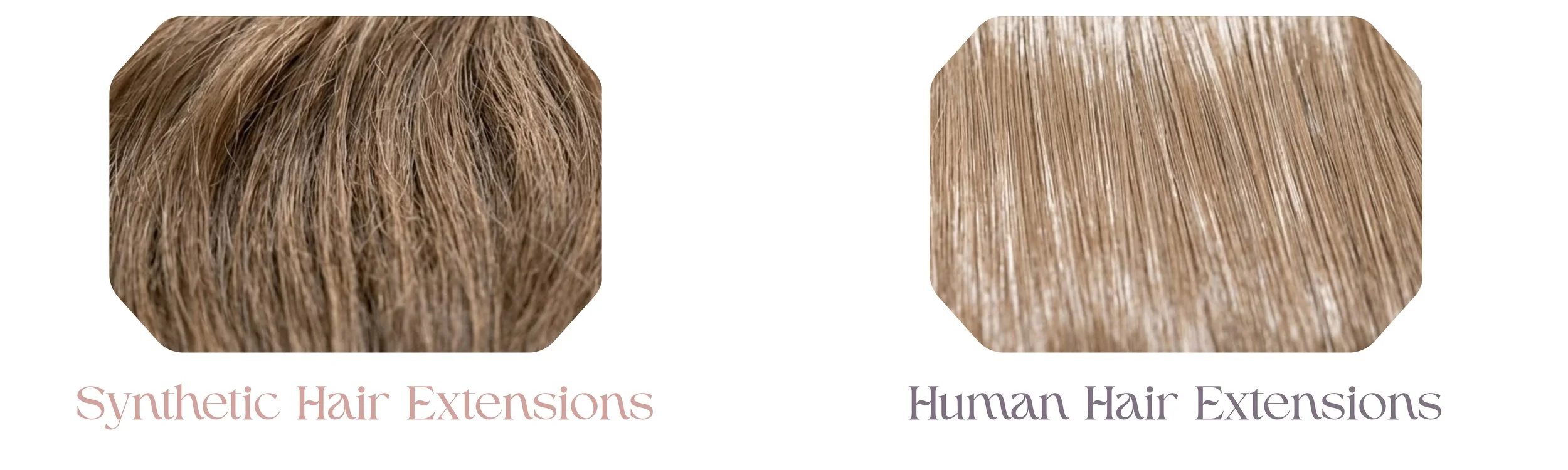
Human hair extensions are made from real human hair, allowing them to look and feel more natural while offering the ability to heat style, tone, and customize them in many cases. Synthetic hair extensions are made from manufactured fibers designed to imitate real hair, but they typically have more limitations when it comes to styling and long-term wear.
The biggest differences come down to realism, maintenance, and longevity. Human hair extensions generally provide a softer, more seamless, and longer-lasting result, while synthetic extensions are usually a more temporary and budget-friendly option.

What Is Synthetic Hair Made Of?
Synthetic hair extensions are made from manufactured fibers such as acrylic, polyester, or other synthetic materials designed to imitate the appearance of real hair. Many synthetic extensions come pre-styled, allowing them to hold their shape whether straight, wavy, or curly with very little daily styling required.
One advantage of synthetic hair is convenience. Because the fibers are designed to maintain their style, they can be a lower-maintenance option for short-term wear or occasional use.
However, synthetic hair extensions do have limitations. Most cannot tolerate high heat from curling irons or flat irons, and they typically do not blend or move as naturally as real human hair. Over time, the fibers may also become stiff, shiny, or more prone to tangling compared to human hair extensions.
What Are Human Hair Extensions Made Of?
Human hair extensions are made from real human hair, which allows them to look, feel, and move naturally while blending seamlessly with your own hair. Higher-quality extensions are carefully processed to help maintain softness, shine, and overall hair integrity.
Because they are made from real hair, human hair extensions offer much more styling flexibility than synthetic options. They can typically be curled, straightened, blow-dried, and customized similarly to natural hair, making them ideal for clients looking for a soft, natural-looking result.
Another major benefit is longevity. With proper maintenance and professional care, high-quality human hair extensions can last for several months while continuing to look healthy, luxurious, and easy to wear.
Side-by-Side Comparison: What You Need to Know
Understanding the differences between human and synthetic hair extensions becomes much easier when comparing appearance, styling flexibility, maintenance, and longevity side by side.
Appearance
Human hair extensions typically offer the most natural look and movement, blending more seamlessly with your own hair while maintaining softness and shine. Synthetic hair extensions may look good initially, but over time they can appear overly shiny, stiff, or less natural.
Styling Flexibility
Human hair extensions can usually be curled, straightened, blow-dried, and restyled just like natural hair. Synthetic hair extensions generally hold their original style and often cannot tolerate high heat unless specifically labeled as heat-resistant.
Longevity
High-quality human hair extensions typically last significantly longer with proper maintenance and professional care. Synthetic extensions are generally considered more temporary and are better suited for short-term or occasional wear.
Maintenance
Both types of extensions require care, but human hair extensions usually need maintenance routines similar to natural hair, including proper washing, brushing, hydration, and salon upkeep. Synthetic extensions are lower maintenance in some ways, but they are often more difficult to restore once the fibers begin to tangle or wear down.
Cost
Synthetic hair extensions are generally more affordable upfront, making them a more budget-friendly option for short-term wear or occasional use. Human hair extensions typically require a higher initial investment, but they often provide better long-term value because of their more natural appearance, styling flexibility, and overall longevity.
Lifespan Comparison: Which One Lasts Longer?
One of the biggest differences between human and synthetic hair extensions is longevity.
High-quality human hair extensions can last for several months with proper maintenance and professional care. Because they are designed for long-term wear and repeated styling, they tend to maintain their softness, movement, and natural appearance much longer.
Synthetic hair extensions are generally more temporary. Depending on wear, styling, and maintenance, they may last anywhere from a few weeks to a few months before the fibers begin to tangle, dry out, or lose their appearance.
If you are looking for a more natural, long-term solution, human hair extensions are typically the better choice. For more temporary wear, occasional use, or shorter-term styling, synthetic hair extensions can still be a good option depending on your needs and budget.
Cost Breakdown: Budget vs Long-Term Value
Price is often a major factor when choosing hair extensions, especially for first-time extension clients. Synthetic hair extensions are usually more affordable upfront, making them appealing for temporary styles or occasional wear.
However, it is important to consider long-term value as well. Because synthetic hair extensions tend to wear out faster, they often need to be replaced more frequently over time. Human hair extensions usually require a larger initial investment, but they generally last longer, look more natural, and maintain their quality much better with proper care.
In many cases, investing in high-quality human hair extensions can provide better overall value, consistency, and wearability in the long run.
Styling and Maintenance Differences
Proper maintenance plays a major role in how long hair extensions last and how natural they continue to look over time.
Human hair extensions typically require care similar to natural hair, including gentle washing, conditioning, hydration, and proper brushing. If you regularly heat style your hair, using a quality heat protectant is important to help maintain softness and prevent dryness.
Synthetic hair extensions are generally lower maintenance when it comes to styling since they often hold their original shape. However, they require more caution because many synthetic fibers cannot tolerate high heat and may become damaged more easily. Gentle detangling and proper storage also help reduce frizz and tangling.
If you are still unsure which option may be the best fit, learning more about the different types of hair extensions can help you better understand how different methods, hair types, and maintenance routines work together.
How to Choose the Right Option for Your Lifestyle

Choosing between human and synthetic hair extensions ultimately comes down to your lifestyle, maintenance preferences, budget, and overall hair goals.
If you are looking for the most natural appearance, long-term wear, and the ability to heat style freely, human hair extensions are usually the better choice. They are ideal for clients who wear extensions regularly and want them to blend and feel as natural as possible.
Synthetic hair extensions may be a better fit for temporary styles, occasional wear, experimenting with different looks, or working within a smaller budget.
Your daily routine also matters. If you frequently curl, straighten, or style your hair, human hair extensions offer much more flexibility. If you prefer something lower maintenance that holds its original style with minimal effort, synthetic hair can still be a convenient option.
Real-Life Scenarios: What Works Best?
Choosing between human and synthetic hair extensions often depends on how you plan to wear them and how much maintenance you are comfortable with.
Occasional use: Synthetic hair extensions can work well for special events, photoshoots, vacations, or temporary style changes where long-term wear is not the priority.
Daily wear: For clients wearing extensions regularly, human hair extensions are typically the preferred option because they offer a more natural look, better longevity, and greater styling flexibility.
First-time users: Synthetic hair can sometimes be a lower-commitment way to experiment with extensions before investing in long-term professional extension methods.
Long-term investment: Human hair extensions usually provide better long-term value due to their durability, softer appearance, and ability to maintain quality with proper care and maintenance.
Ultimately, the best choice depends on your lifestyle, budget, maintenance routine, and the overall look you want to achieve. These examples highlight how different needs can lead to different choices.

Marina Vogel
“What do professionals recommend when deciding between human and synthetic hair extensions?”
The right type depends on your lifestyle and how often you plan to wear them,” explains a stylist. “Human hair extensions are best for a natural look and daily styling, while synthetic extensions are ideal for occasional use or a pre-styled look.Human hair requires care to last longer, but synthetic hair is lower maintenance with some limitations, especially for heat styling.
“If you want durability and realism, human hair is worth the investment; if you need something temporary and affordable, synthetic hair works well.”
Ready to Choose the Right Extensions?
Understanding the difference between human and synthetic hair extensions can help you make a more confident decision based on your lifestyle, maintenance preferences, budget, and overall hair goals.
Whether you are looking for a temporary style change or a more seamless, long-term transformation, choosing the right extension method and hair type makes all the difference in both appearance and longevity.
If you are ready to explore your options, booking a consultation at a premier hair salon can help you determine which extension method is best suited for your hair type, lifestyle, and desired result.
If you found this guide helpful, feel free to save it or share it with someone considering hair extensions and looking for honest, professional guidance.
FAQ Section
-
Human hair extensions are made from real hair and offer a natural look and longer lifespan, while synthetic extensions are made from artificial fibers and are more affordable but less durable.
-
Synthetic extensions typically last a few weeks to a few months, depending on how often they are worn and how well they are maintained.
-
Yes, for many people. They last longer, look more natural, and can be styled like your own hair, making them a better long-term option.